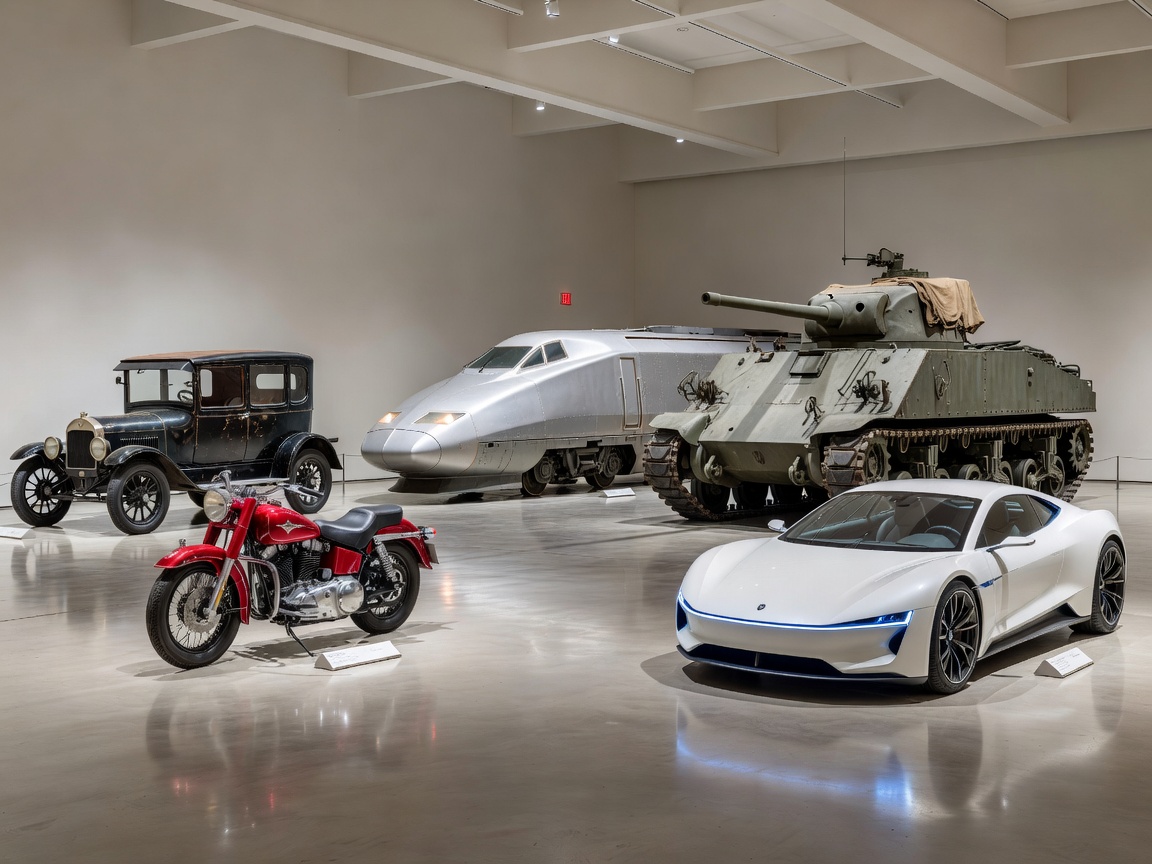
Field guide / collection scope
Start with what the museum collects.
“Automotive museum” is a useful shorthand, not a fixed institutional definition. Some collections focus on passenger cars. Others document all forms of transport, industrial production, engineering or design. The buildings and interpretation can matter as much as the objects. A former workshop, a public gallery and a company archive each create a different kind of visit.
Use the distinctions below to identify likely subjects. Museums can overlap categories. Verify the current collection and display directly; stored objects, loans and changing exhibitions mean that a catalogue entry does not guarantee an object is on view.
Automotive and motorcycle museums
Automotive museums generally centre on motor vehicles and their histories. Displays may group vehicles by period, manufacturer, body style, technology or social use. Look for supporting material such as drawings, photographs, tools and oral histories. These explain context that a vehicle alone cannot show.
Motorcycle museums focus on powered two-wheelers, related equipment and riding culture. The collection may include early machines, touring designs, competition vehicles or manufacturing records. Small displays can still offer a detailed account of construction and use. Check whether interpretation includes the practical differences between motorcycle and car engineering.
Transport museums
Transport museums place vehicles within wider systems. A single institution may interpret buses, trams, rail, road freight, water transport or public infrastructure. This format can show how vehicles connect to depots, routes, ticketing, maintenance and city growth. A car may appear as one part of a larger mobility story rather than as the main subject.
Open-air transport collections may include preserved vehicles, track, stations or working demonstrations. Access can depend on weather, maintenance and operating days. Confirm whether a vehicle is displayed statically or used in service, and whether separate admission or timed sessions apply.
Industrial, technology and design museums
Industrial museums explain production and labour. They may interpret factories, tools, suppliers, energy use, industrial communities and changing methods of manufacture. Vehicle displays can appear alongside machinery or other manufactured goods. The strongest fit is for visitors interested in how an industry developed, not only in finished vehicles.
Technology museums focus on systems and technical change. Relevant material may include engines, electrical equipment, materials, control systems or production processes. Design museums examine form, function and visual culture. They can show sketches, models, components and finished products, often placing vehicle design alongside other applied arts.
Manufacturer and private collections
Manufacturer collections can offer direct insight into a company’s products, prototypes, design process and corporate history. Their scope reflects the institution’s collecting policy. They may not provide a complete account of the wider industry or of competing products. Read labels and catalogue notes with that perspective in mind.
Private collections can be highly specialised. They may be organised around a vehicle type, period, individual collector or technical interest. Access and interpretation vary. Check whether the collection operates as a public museum, opens by appointment, or is temporarily closed. Do not assume private access from an online listing.
Racing collections and engineering archives
Racing-focused collections interpret competition vehicles, teams, circuits, equipment and sporting history. A museum may cover a single discipline or include racing within a broader transport story. Verify current exhibits and any restrictions around access to specialist areas.
Engineering archives may hold drawings, photographs, catalogues and records rather than a large vehicle display. Researchers should ask about appointment rules, reproduction permissions, catalogue access and handling requirements. Archive access and gallery admission are often separate processes.
Choose by visit purpose
Before choosing, write down the subject you want to understand. Then compare collection scope, interpretation, building format and access. Consider whether you need a broad overview, a close technical study, family-friendly context, an archive appointment or a working transport experience.
- Read the museum’s own collection description and current visitor notice.
- Check the distinction between permanent holdings and current display.
- Confirm opening arrangements, prices, booking, accessibility and photography rules.
- Allow time for separate galleries, outdoor areas or transport demonstrations.
- Contact the institution if a specific vehicle, document or facility is essential to your visit.
Good for / what to know
Good for: choosing an institution by research interest, balancing a travel itinerary and understanding why collection formats differ.
What to know: category labels are broad. They do not confirm the current display, access arrangements or interpretation languages. Check directly with the institution before travel.
Related guides
Browse by European region · Motorcycle and transport guide · Contact the archive