Field guide / historic vehicles
Follow the car beyond its silhouette.
Historic car collections can show changes in technology, manufacture, design and everyday life. A vehicle on display is not a complete account by itself. Its materials, controls, construction and place in a collection provide clues. Labels, drawings, photographs and production records help explain how a car was used and why its design mattered.
This guide uses broad periods and vehicle categories. These labels are interpretive, not strict universal definitions. Museum collections and current displays vary. Confirm object access, exhibition details, prices, schedules and visitor conditions directly with the institution before travelling.
Early automobiles
Early automobiles document the shift from experimental road vehicles to more established forms of powered transport. Museums may use surviving vehicles, replicas, technical diagrams or archive material to explain that change. Ask how the institution identifies original components and what evidence supports its interpretation. This matters when vehicles have been restored or altered over time.
Look for comparisons with earlier transport and contemporary infrastructure. Roads, fuel supply, maintenance skills and regulations influenced vehicle development. An early-car gallery can therefore reveal social and technical change beyond the object itself.
Pre-war and post-war vehicles
Pre-war collections often show a wide range of coachwork, production methods and engineering approaches. The term covers many decades and national contexts, so a focused period label is more useful than a broad category alone. Displays may contrast individually crafted bodies with increasingly standardised manufacture, where the collection and interpretation support that comparison.
Post-war vehicles can show how manufacturers responded to rebuilding, changing materials, new production methods and wider demand for personal mobility. Family vehicles, commercial derivatives and specialist models offer different views of daily use. Avoid assuming that one display represents every household or market.
Classic cars and vehicle roles
“Classic car” has no single museum-wide definition. It may refer to a period, collecting category, cultural reputation or vehicle condition. Use a museum’s own terminology. Touring cars, sports cars, luxury vehicles and family cars reflect different design priorities. Their body forms, packaging, controls and intended use can be compared without treating one type as more important than another.
Sports and competition-related cars can introduce questions of performance, regulation and engineering. Touring vehicles can reveal comfort, luggage and long-distance use. Family cars can illustrate how passenger space, production scale and ownership patterns changed. Luxury vehicles may connect design to materials, craftsmanship and status.
Engineering milestones and design evolution
A useful collection makes technical developments legible. Visitors can compare construction, layout, steering, suspension, braking and body design across vehicles. Engineering milestones should be presented with context: a new system may have developed gradually, appeared in different forms or been adopted at different speeds. Check labels and archival evidence rather than relying on a simplified “first” claim.
Design evolution is also visible in proportions, visibility, seating, controls and the relationship between cabin and body. Sketches and models can show decisions that a finished car conceals. Materials and manufacturing methods help explain how shape, strength, weight and cost interact.
How to read a car display
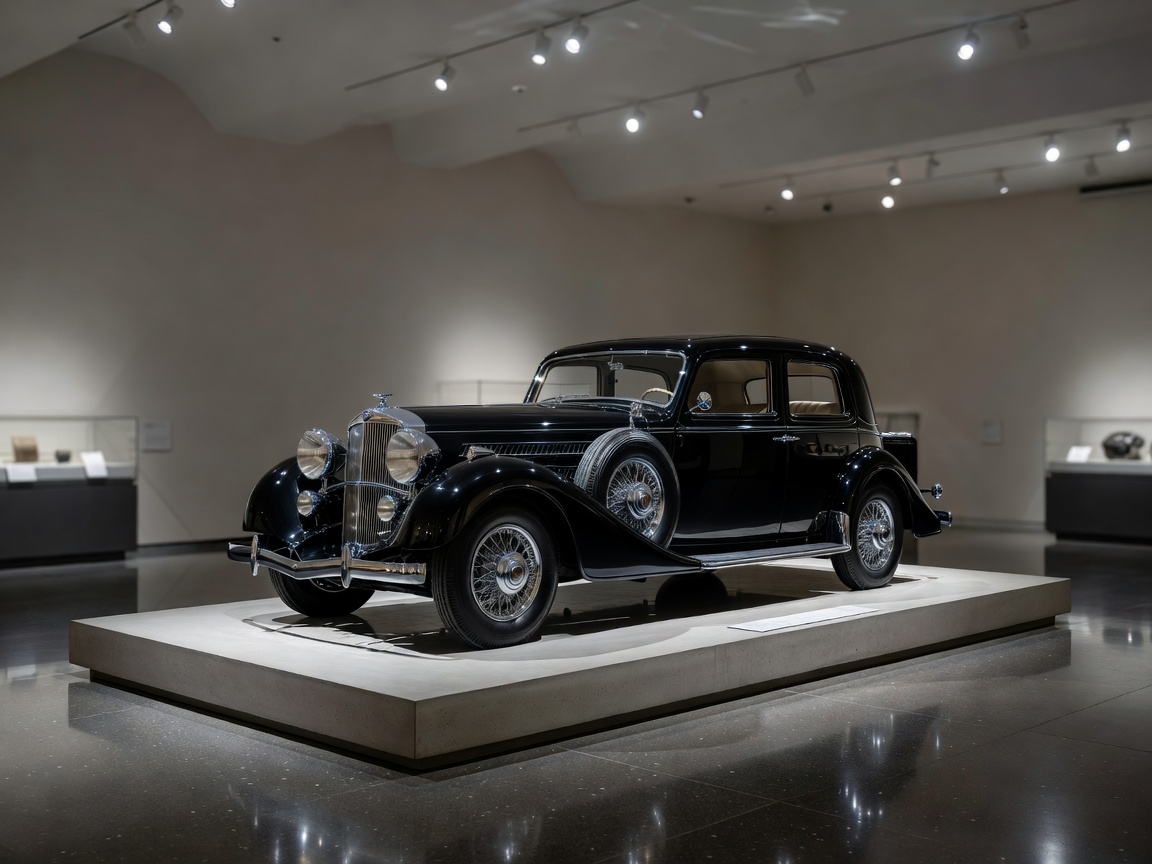
Choose one vehicle and examine it in sequence. Start with the label: date, maker, intended use and collection context. Then compare the exterior, cabin, controls and visible mechanical layout. Notice which features are original, restored or reconstructed if that information is supplied. Look for supporting objects that connect the car to design, production or use.
- Check whether the gallery groups vehicles by time, manufacturer, function or technology.
- Look for archival evidence that explains design choices and production context.
- Note the distinction between a vehicle’s original configuration and later restoration.
- Ask staff whether a specific car is on display if it is central to your visit.
- Check photography rules and whether close access is restricted.
Selection criteria for a visit
Match the museum to your question. A broad transport institution may place cars in social context. A specialist collection may give more space to a particular maker or period. A design museum may emphasise sketches and form, while an engineering museum may explain systems and manufacturing. Review collection descriptions and current exhibition pages before travelling.
Good for: design study, family mobility history, vehicle technology and comparisons across historical periods.
What to know: not every collected vehicle is on display. Terms such as “classic” vary, and restoration histories can be complex. Verify current access and visit conditions with the museum.
Related guides
Compare museum formats · Read the engineering guide · Contact the archive