Field guide / vehicles and systems
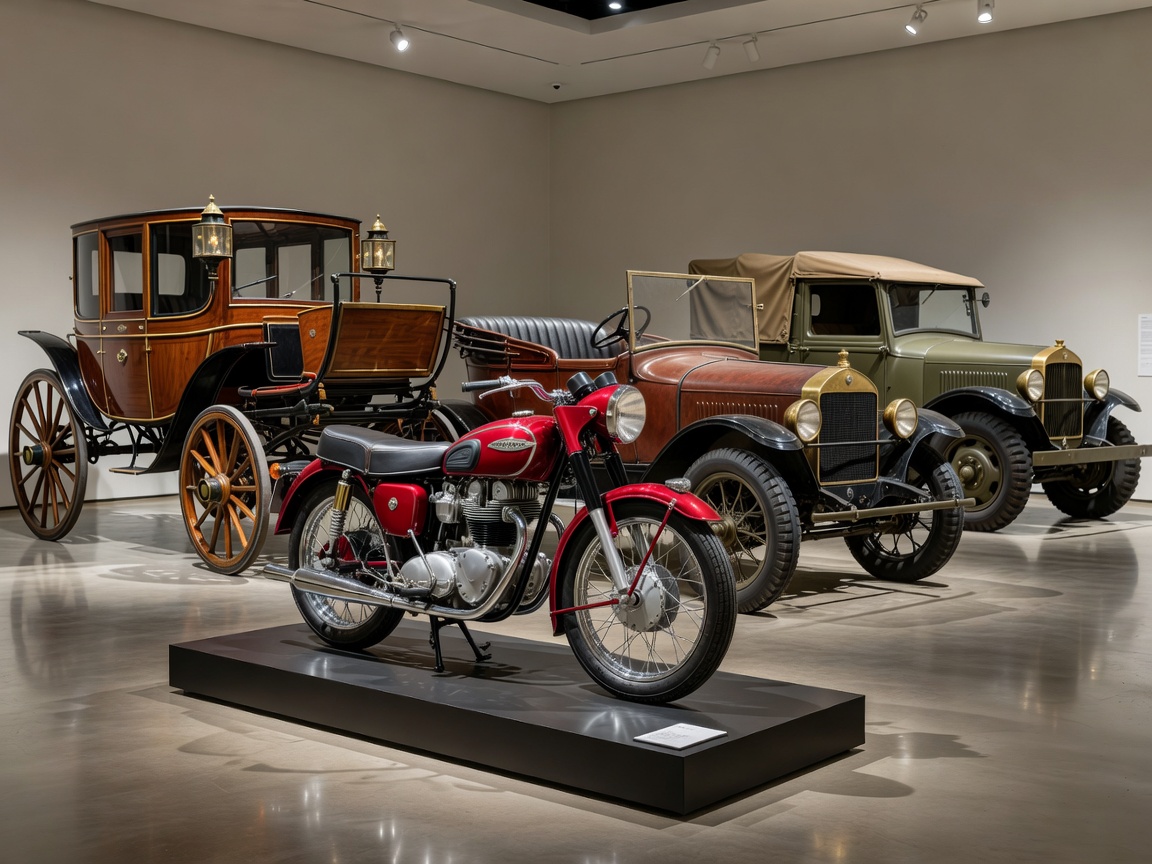
Transport collections widen the frame.
Car museums often organise a visit around passenger vehicles, manufacturers or design periods. Motorcycle and transport museums can extend the subject to work, public services, infrastructure and daily mobility. Their collections may include machines, tools, uniforms, signs, documents and preserved environments. This wider context helps explain how vehicles operated within a transport system.
Collection scope varies. Some institutions specialise in motorcycles or road vehicles; others cover several modes of transport. The categories below help you decide what to look for. Check the institution’s current visitor information before travelling. Displays, operation days, prices, schedules and access arrangements can change.
Motorcycles and scooters
Motorcycle collections can trace changes in frame design, engines, controls, materials and intended use. Early motorcycles may be shown beside related bicycles or workshop objects. Touring machines can lead to questions about distance, luggage and rider protection. Racing motorcycles can illustrate competition and technical development, but displays should be understood within their sporting and historical context.
Scooters offer a different design approach, often prioritising compact packaging and urban use. A museum may interpret ownership, commuting or popular culture alongside technical features. Look for period photographs, advertising and service material where available. These sources help place a machine in everyday life rather than treating it as an isolated object.
Commercial road transport
Trucks and other commercial vehicles reveal the movement of goods, materials and services. Their design reflects load, route, operating conditions and work patterns. Collections may include delivery vehicles, specialist bodies or workshop equipment. Ask how the museum interprets the people who drove, maintained and loaded these vehicles, as well as the vehicles themselves.
Bus collections connect vehicle design with public services and urban development. A bus can be interpreted through body construction, passenger access, route networks, ticketing and depot work. Some institutions preserve working vehicles or run demonstrations. Operation may depend on staffing, maintenance, weather or a scheduled event, so do not assume that a vehicle will run on the day of your visit.
Public transport and rail connections
Transport museums can cover trams, railways and other public systems alongside road vehicles. These collections show how modes connect: stations, interchanges, depots and street layouts all shape travel. A museum focused on an operating line may offer a ride as part of its visitor experience. A static collection may instead emphasise preservation and interpretation.
Rail links matter in two ways. Rail transport may be part of the collection’s subject, and it may also be the visitor’s route to a museum site. Check the final leg from station to entrance. Outlying depots and open-air sites may require a bus, taxi, walk or separate connection.
How transport collections differ
A conventional car gallery can offer close comparisons between vehicle bodies, cabins and technologies. A broad transport collection usually trades depth in one vehicle category for a view across systems. It may explain how public policy, city planning, freight, work and access affected mobility. An industrial museum may place vehicles within production history, while a railway or transit museum may prioritise routes and infrastructure.
These differences affect the visit. Large vehicles need more floor space, so exhibits can be spread across several halls or outdoor areas. Interpretation may focus on operation and service rather than individual design milestones. Some historic vehicles are presented in working environments that have uneven floors, limited step-free access or weather exposure. Check access information in advance.
Plan a focused visit
- Confirm which vehicle categories are represented and what is currently on view.
- Check whether working demonstrations run regularly, seasonally or only on selected dates.
- Review walking distances, indoor/outdoor areas and accessibility details.
- Ask whether photography, cab access or guided tours have separate restrictions.
- Plan around the site’s transport links and allow time for the full grounds.
Selection criteria
Choose a collection by subject and format. A motorcycle specialist suits close study of powered two-wheelers. A transport museum can provide comparative context across modes. A bus or railway collection may be strongest for public mobility and operations. A commercial transport collection can give insight into freight and work. Read the museum’s stated scope and current visitor notices, not only a short directory label.
Good for: visitors interested in motorcycles, public transport, freight, vehicle operation and the relationship between machines and infrastructure.
What to know: vehicle operation and access are not guaranteed. Confirm current opening arrangements, event schedules, prices and accessibility directly with the institution.
Related guides
Compare collection formats · Explore engineering themes · Contact the archive