Field guide / accessible engineering
Understand the systems as a whole.
Automotive engineering brings together power, structure, control, materials and manufacturing. Museum displays can make these subjects tangible through vehicles, cutaway components, drawings and production objects. This guide introduces key themes without assuming specialist knowledge. It describes historical and conceptual systems, not instructions for modifying or repairing vehicles.
Engineering changes rarely happen in isolation. A design responds to cost, regulation, available materials, production methods, user needs and the technology around it. Museums differ in how much detail they provide. Use their labels and archival evidence to understand a specific object’s history.
Engines and power
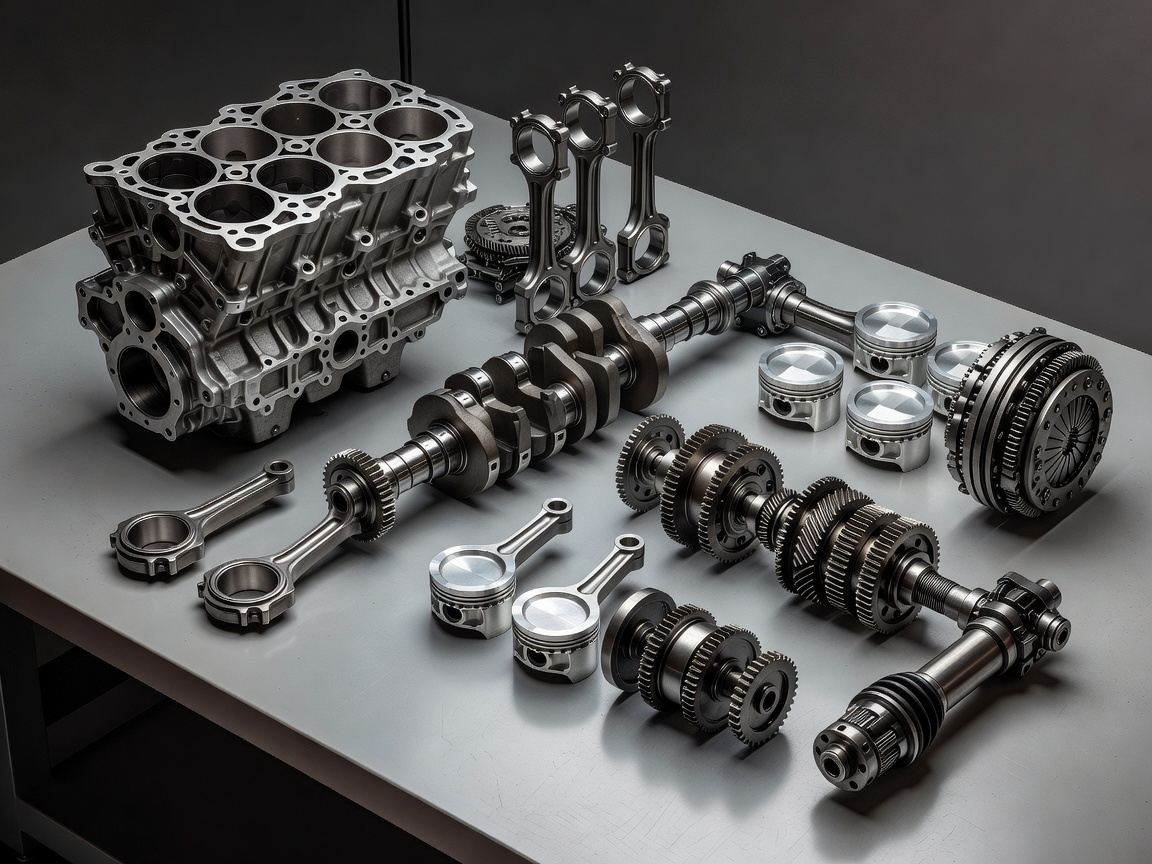
An engine converts stored energy into motion. Automotive museums may compare internal-combustion engines, electric motors and related power systems. Displays can show layout, cooling, fuel or electrical components, and how power reaches the wheels. A cutaway reveals internal arrangements that are hidden in a complete vehicle.
Engine development reflects broader changes in materials, manufacturing, efficiency and emissions policy. A collection may show one technical approach, but no single exhibit represents every design path. Look for dates, operating context and explanations of why a system was selected.
Construction and materials
Vehicle construction describes how the body, frame and mechanical systems are assembled. Historical collections can show changes in timber, steel, aluminium, plastics, glass and composite materials. Each material has different properties and production demands. Design choices balance strength, weight, repair, cost and the manufacturing facilities available at the time.
Compare the visible structure with technical drawings or production photographs. These can explain whether a vehicle uses a separate frame, an integrated body structure or another arrangement. Do not infer construction details from appearance alone; consult the museum’s object information.
Suspension, steering and braking
Suspension connects wheels to the vehicle structure and helps manage movement over uneven surfaces. Steering controls direction. Braking reduces speed and brings a vehicle to a stop. Museums may show components separately to explain their roles and historical development. Their design must be considered as a system, not as isolated parts.
Exhibits can make changes in layout or materials easy to compare, but a static display cannot demonstrate real-world performance. Vehicle condition, original specification and restoration history also affect what visitors see. For practical vehicle use or repair, consult qualified professionals and authoritative technical documentation.
Aerodynamics and vehicle design
Aerodynamics concerns how air moves around a vehicle. Shape can affect drag, stability, cooling and noise. Body design also responds to visibility, packaging, safety, production and cultural preferences. Museums may use wind-tunnel models, sketches or body sections to connect form with function.
Design history is not a simple progression toward one ideal shape. Different vehicles solve different problems. A compact city car, a long-distance tourer and a competition car have distinct requirements. Reading them comparatively makes design decisions more legible.
Manufacturing and industrial history
Manufacturing covers the transformation of materials and components into complete vehicles. Museum collections may document handwork, tooling, assembly lines, supplier networks and quality processes. Production methods influence consistency, cost, repair and the scale at which vehicles can be made.
Industrial interpretation also includes people and places: designers, engineers, skilled trades, factory workers and communities. Photographs, tools and records can reveal labour that is not visible in a polished vehicle display. Manufacturer archives offer a focused view, while broader industrial museums can compare vehicle production with other sectors.
Motorsport, electrification and safety
Motorsport engineering can accelerate experimentation in materials, aerodynamics, power and control. Transfer to ordinary road vehicles is not automatic. Rules, budgets and operating conditions differ. Museum displays are useful when they explain the particular challenge a competition vehicle was designed to meet.
Electrification changes energy storage, propulsion and vehicle packaging. Collections may compare early electric vehicles with later developments or present charging equipment and battery materials. Safety development includes vehicle structure, restraint systems, visibility, braking and regulation. Interpretations should identify time period and context; standards evolve.
How to study an engineering display
- Identify the system first: power, structure, control, materials or production.
- Read object dates and notes on restoration, configuration or provenance.
- Compare a complete vehicle with its cutaway, drawing or component display.
- Ask what practical problem a design was intended to address.
- Separate documented facts from interpretation and later technical influence.
Good for: visitors who want accessible context for vehicle design, manufacturing, safety and technical change.
What to know: engineering displays vary in depth. Do not treat a historical exhibit as repair guidance. Confirm current exhibitions and access directly with the museum.
Related guides
Explore historic car collections · Compare museum formats · Contact the archive